More than a century and a half ago, in 1865, Professor Theodor Goldstücker founded a Sanskrit Text Society in London with the aim of making important Sanskrit works available through scholarly publication. Although that early Society succeeded in publishing four volumes of Sanskrit texts, it did not endure, and its work eventually fell into obscurity. The intellectual ambition that motivated Goldstücker’s initiative, however, remains as relevant today as it was in the nineteenth century.
The present Sanskrit Text Society takes inspiration from this earlier endeavour and seeks to renew it in light of contemporary scholarly needs and possibilities. The task of identifying, studying, and publishing Sanskrit texts—particularly those preserved only in unpublished manuscripts—remains vast and urgent. Goldstücker’s own words continue to resonate: “compared to the immensity of the labour to be performed, the beginnings are as yet small, and the labourers few.” If sustained action is not taken, the loss of fragile manuscript materials and the disappearance of unedited texts will only accelerate. Hundreds of Sanskrit works remain unpublished, many of them preserved in vulnerable manuscript form, and their identification, critical editing, and translation constitute an urgent scholarly responsibility.
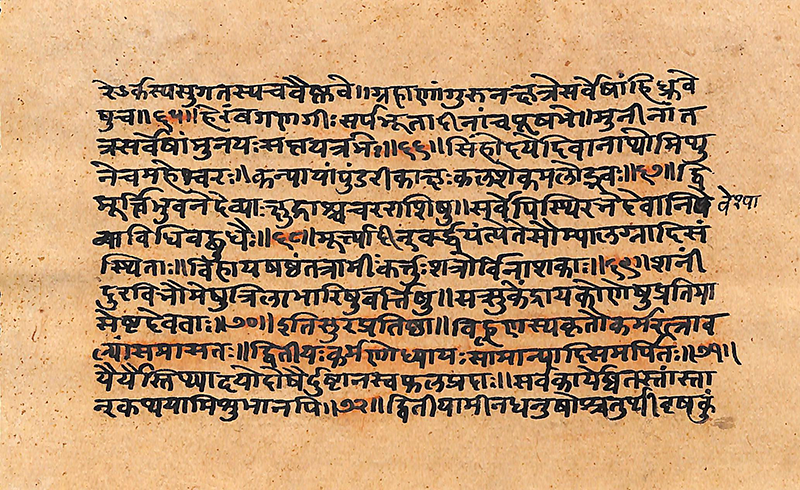
Looking to the future, the STS aims to undertake a major programme devoted to the identification, editing, and translation of hitherto unpublished Sanskrit texts preserved in manuscript collections. Particular emphasis will be placed on rare and fragile materials held in major libraries and archives, including the Bodleian Library, the British Library, and the National Archives of Nepal, alongside other repositories in South Asia and beyond. As part of this initiative, the Society plans to publish a dedicated series of rare and unpublished texts, accompanied by full philological documentation for specialist use, as well as facsimiles of unique and especially significant manuscripts. Where appropriate and feasible, the Society will also publish monographic studies devoted to individual Sanskrit texts or textual traditions in a separate scholarly series.
With the academic participation and guidance of leading Sanskrit scholars worldwide, the STS seeks to identify endangered manuscript materials, prepare critically edited texts, and make them available through high-quality publications, including open-access online editions. Each publication will be accompanied by a scholarly introduction and, where appropriate, a translation. All works will be subject to rigorous peer review, and the academic affairs of the Society will be overseen by an international board of scholars to ensure the highest standards of research and publication.
In addition to its publication activities, the Sanskrit Text Society aims to support emerging scholars by providing small research grants to university students, particularly those engaged in work on unpublished Sanskrit texts. The Society intends to initiate this programme as soon as sufficient institutional and philanthropic support has been secured. Through these combined efforts, the STS aspires to contribute meaningfully to the preservation, study, and responsible transmission of Sanskrit textual heritage for future generations.